


Enzymes that Add Nucleotides to DNA:Transcription, Replication, and Repair
Trin 1
In eukaryotic transcription, RNA Polymerase II (Pol II) is the core enzyme that synthesizes the RNA transcript. Pol II is recruited to the transcription start site by a suite of general transcription factors that recognize the TATA box, a conserved promoter element upstream of the coding region. These TFII factors position Pol II on the DNA and facilitate the transition from initiation to elongation. As Pol II translocates along the template strand, it catalyzes phosphodiester bond formation, adding ribonucleotides complementary to the DNA template.
Prokaryot transkription
Trin 1
Bacterial transcription begins with RNA Polymerase holoenzyme, comprising the core polymerase (α₂ββ′ω) and the sigma (σ) factor. Unlike eukaryotes, the σ subunit directly recognizes promoter sequences and guides the holoenzyme to the start site. The σ factor also melts the DNA duplex to expose the template strand, enabling the core enzyme to synthesize a short RNA primer before transitioning to processive elongation.
DNA-replikation
Trin 1
Replication in both prokaryotes and eukaryotes proceeds by bidirectional unwinding of the duplex at replication forks. Each parental strand serves as a template for a new complementary strand. The leading strand is synthesized continuously by DNA Polymerase III (Pol III) in bacteria, or Pol δ/ε in eukaryotes, whereas the lagging strand is assembled in short Okazaki fragments by Pol III (bacteria) or Pol δ (eukaryotes). DNA Polymerase I (bacteria) or Pol α in eukaryotes removes RNA primers and fills the resulting gaps.
Polymerase-diversitet
Trin 1
Bacteria encode five DNA polymerases, while humans possess fifteen, broadly categorized into three families:A, B, and X. Class A polymerases, such as bacterial Pol III, exhibit high processivity and generate long stretches of DNA (≈30 000 nt) before dissociating. Class B polymerases, including Pol I, synthesize short Okazaki fragments (~600 nt) and possess 5′→3′ exonuclease proofreading activity. ClassX-enzymer er specialiseret i DNA-reparation; they add nucleotides in short, often error‑prone stretches during non‑homologous end joining.
 Varme artikler
-
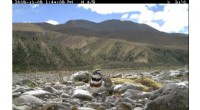 Hvad næsen ikke ved, hjælper dyrelivet:Brug af olfaktoriske signaler til at beskytte sårbare arte…Jord-rugende kystfugle som den dobbeltbåndede plover er sårbare over for invasive landlevende rovdyr i New Zealand, herunder katte, pindsvin og fritter. Olfaktoriske signaler kan hjælpe dyrelivsforval
 -
 Er min hund for kold? Hvor koldt er for koldt til en gåtur? Sådan fortæller duKredit:Shutterstock Når vinteren sætter ind, tænker du måske:hvordan ved du, om din hund er varm nok? Og hvor koldt er for koldt til at tage dem en tur? Det er en tricky en; meget afhænger af dere
 -
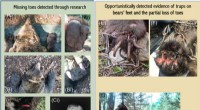 Manglende grizzlybjørnetæer resulterer i opfordring til at ændre praksisDyr opdaget med amputerede tæer gennem forskningsfangster i Elk Valley (A–D) og anekdotiske beviser for grizzlybjørne med fælder på fødderne (E–G). Hvert bogstav i A-D repræsenterer en af de 4 unikk
 -
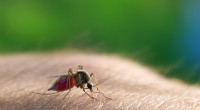 Ekspertguide til at holde dig bidefri denne sommerFotograferet og redigeret af Janos Csongor Kerekes/Moment/GettyImages Sommersjov kan hurtigt blive til en kamp mod sæsonens mest almindelige skadedyr. Heldigvis kan de fleste fejl afskrækkes med enkl
- Træer og doodlebugs udsender metan – spørgsmålet er, hvordan?
- To eksempler på, hvordan Nilen formede det gamle Egypten
- Forståelse af kloningsforskning:typer, applikationer og etiske overvejelser
- Hvilken sæson er Jorden i, når den er øst for solen?
- Hvad er opadgående bølgende skyer?
- To genstande tiltrækker hinanden gravitationsmæssigt med en kraft på 2,5 10-10 N, når de er 0,29…